
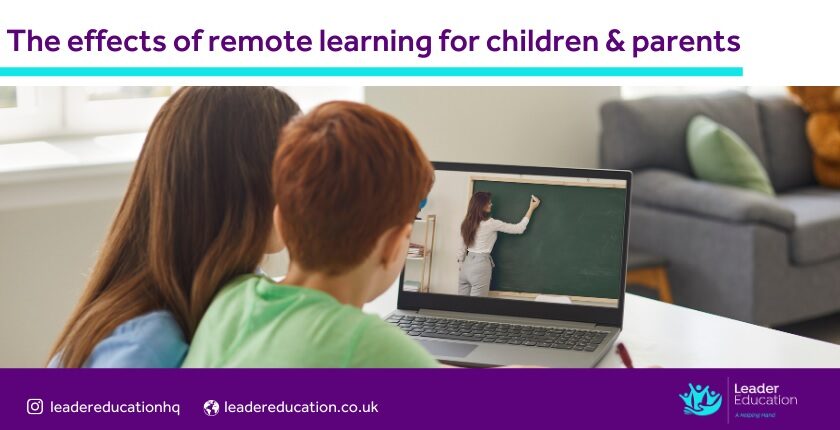
The effects of lockdown and remote learning on children and parents
Lockdown has no doubt been difficult for individuals and families across the UK, with the pandemic bringing changes in daily life, routines and interactions for everyone. Children and parents have made the move to remote learning and working, but how has this impacted them?
As always, there are advantages and disadvantages to adapting to a new situation pretty quickly, however the latest State of the Nation report shows that people aged five to 24 have remained resilient throughout the changes going on in their lives. The report suggests that isolation from friends and worries that loved ones may become sick have been challenging for children, but their overall happiness remains similar to figures from previous years.
One of the factors which has also been taxing during this unusual time is remote learning, whereby students learn from home using modern technology like laptops, tablets and computers. It not only is a change in learning for students, but puts pressure on parents to monitor their children’s work while juggling their own responsibilities, such as working from home. Even if parents do have the time to spend teaching their children, it can be hard to grasp the current curriculum and new learning methods which have been introduced in class, however it has proved successful for some families, and over time, more people have adapted to this new, different way of life.
Remote learning gives students the flexibility to go away and think about what they’ve learnt in their own time. Although there is a lesson schedule to follow, children aren’t spending all day glued to their device watching lessons, which allows them to gain a real understanding of topics covered. Remote learning has opened up new ways of communicating and interacting with teachers via emails or video calls – all skills that will prepare them for a world of work in the future.
Getting to grips with technology however isn’t plain sailing for everyone. From not understanding how a device works, to feeling remote working is disrupting a normal learning pattern, children face their own struggles in learning online. Some children don’t have access to proper WiFi or technology which can make them feel frustrated and leave them unable to keep up with online lessons.
For parents who aren’t trained in, or don’t have experience in teaching children, helping their child with online learning can be hard for a number of reasons. They could simply not have the time because of their own job or not have a clue where to begin, leading to feelings of failure. To alleviate some of these thoughts, you can keep in regular contact with the school, ask them for support if you need it and ask your peers for advice and tips too.
Although it can be challenging at times, one of the great benefits of remote learning is that parents get to spend more time with their children. Whether it be an extra 30 minutes or a few hours a day, it can help develop a stronger bond, not to mention the time saved from the school run. Less travel also means more sleep for children, which is likely to increase their productivity levels when learning from home – something which may also be helped by not constantly being surrounded by their peers. Less interaction with others can prove to decrease distraction.
As stated above, there are benefits and downfalls of remote learning but finding a balance is what works for families who have mastered the art of juggling multiple jobs and online lessons at the same time.
At Leader Education, we pave the way in finding the best talent for your organisation. If you’re looking for teaching staff, or you’re a teacher looking for a new role during the pandemic to help students with remote learning, we can help you. Take a look at our live vacancies here or here if you’re thinking of hiring.